
Brakes
Why Does My Car
Shake When Braking?
A smooth stop should feel predictable. If your steering wheel shakes, your brake pedal pulses, or your vehicle vibrates when slowing down, it is worth finding out why.
Norm’s Automotive CenterLos Alamitos, California
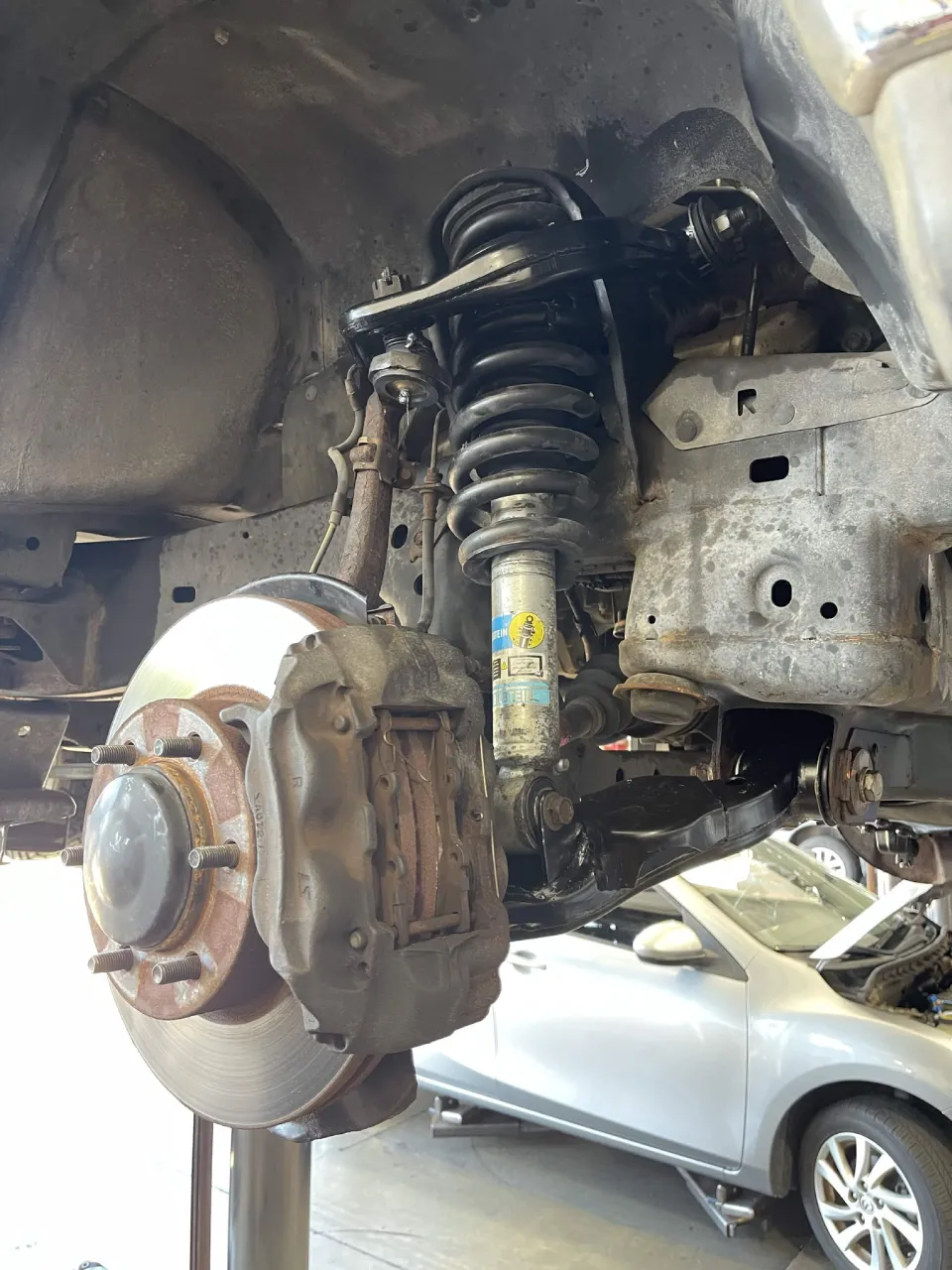
Automotive advice from Los Alamitos
Norm’s Automotive Center has been serving drivers in Los Alamitos and the surrounding communities since 1985. When a vehicle starts shaking under braking, the first step is figuring out what is actually causing the problem—not automatically replacing parts.
A smooth stop should feel predictable.
If your steering wheel starts shaking, your brake pedal pulses, or the entire vehicle seems to vibrate when you slow down, something deserves attention.
Brake problems are one possible cause, but they are not the only possibility. Brake pads, rotors, calipers, tires, wheels, suspension components and other parts can sometimes create similar symptoms.
The important thing is to determine what is actually causing the vibration before replacing parts.
What Does the Shaking Tell You?
Where you feel the vibration can provide useful information.
If the steering wheel shakes primarily while braking, the problem may be related to the front brakes, tires, wheels or front suspension.
If you feel a pulsing sensation through the brake pedal, the braking system itself deserves close inspection.
If the entire vehicle shakes or shudders during braking, there may be an issue involving the brakes, tires, wheels, suspension or another component.
These symptoms are clues, not a diagnosis.
A proper inspection is the best way to determine what is actually happening.
1. Uneven Brake Rotors
One of the most common causes of brake vibration is variation in the brake rotor surface or thickness.
People often describe this as a “warped rotor.” In reality, brake vibration can develop for several reasons, including uneven rotor thickness, surface deposits or other changes in the rotor and pad contact surfaces.
As the brake pads contact an uneven surface, the braking force can vary slightly as the rotor turns. You may feel this as a vibration through the steering wheel or a pulsation through the brake pedal.
That does not automatically mean every rotor needs to be replaced.
The condition of the rotor, its remaining thickness, the brake pads and the rest of the braking system all need to be evaluated before deciding on the appropriate repair.
2. Uneven or Worn Brake Pads
Brake pads do not always wear perfectly evenly.
If a pad is wearing unevenly, has become glazed, or is not making consistent contact with the rotor, braking performance can become less smooth.
Uneven pad wear can also be a clue that something else is going on.
For example, a caliper that is not operating correctly can cause one pad to wear differently from the others.
This is why looking at the pads alone is not always enough.
The complete brake system should be inspected.
3. A Brake Caliper That Isn't Operating Correctly
The brake caliper is responsible for pressing the brake pads against the rotor.
If a caliper or its related hardware is sticking or not releasing properly, the brake pad may remain in contact with the rotor when it should not.
This can lead to uneven pad and rotor wear, excessive heat, pulling while braking, or other braking problems.
In some cases, you may also notice a burning smell or one wheel becoming significantly hotter than the others.
A caliper problem should be diagnosed rather than assuming the pads or rotors are the only issue.
4. Worn Suspension Components
Not every vibration felt while braking is caused by the brakes.
Worn suspension or steering components can sometimes become more noticeable when the vehicle's weight shifts forward during braking.
Depending on the vehicle and the component involved, worn bushings, ball joints, tie rods or other suspension and steering components may contribute to vibration, instability or unusual braking behavior.
If the brakes appear to be in good condition but the vehicle still shakes during braking, the suspension and steering systems may need to be inspected as well.
5. Tires, Wheels or Alignment Problems
Tires and wheels can also create vibrations that become more noticeable when braking.
A tire with unusual wear, a damaged wheel, an improperly balanced wheel or another tire-related problem can produce vibration at certain speeds.
Alignment problems can contribute to symptoms such as pulling, uneven tire wear or an off-center steering wheel.
Because several different problems can feel similar from the driver's seat, it is important to look at the entire vehicle rather than immediately replacing a single brake component.
Local auto repair knowledge
The Same Symptom Can Have Different Causes.
If you're driving around Los Alamitos, Rossmoor, Seal Beach, Cypress, Long Beach, Lakewood or Cerritos and your vehicle starts shaking when you brake, it can be tempting to search for the quickest answer online.
The problem is that a symptom isn't always a diagnosis.
A shaking steering wheel could involve the brakes, tires, wheels or suspension. A pulsing brake pedal can point toward the braking system. A vehicle that pulls while braking can introduce another set of possibilities.
That's why the right repair starts with finding the cause.
At Norm's, we want to understand what the vehicle is doing, show you what we're finding and then explain what makes sense to repair.
Why Does the Car Only Shake When I'm Braking?
This is an important detail.
If the vehicle drives smoothly at highway speed but begins vibrating when you apply the brakes, the braking system becomes a logical place to start the diagnosis.
However, that does not guarantee the brakes are the only possible cause.
The additional details matter:
- Does the steering wheel shake?
- Does the brake pedal pulse?
- Does the vehicle pull to one side?
- Does the vibration happen only at higher speeds?
- Does it happen during light braking, heavy braking, or both?
- Did the problem begin after brake or tire work?
- Do you hear grinding, squealing or other unusual noises?
These observations can help a technician narrow down the cause.
Does a Shaking Car Always Need New Rotors?
No.
A vehicle that shakes while braking should be inspected, but replacing rotors without determining why the vibration is occurring is not always the right approach.
Depending on what the inspection reveals, the cause could involve the rotors, pads, calipers, tires, wheels, suspension or another component.
The correct repair depends on the condition of the individual parts and the vehicle's overall braking system.
The goal should be to correct the underlying problem—not simply replace parts based on the symptom.
Digital vehicle inspections
We’ll Show You What We See.
You shouldn't have to take a repair shop's word for it.
At Norm's, our digital vehicle inspections can help show you what our technicians are seeing so you can understand the condition of your vehicle and make an informed decision.
When Should You Have Brake Vibration Inspected?
If your vehicle has developed a new or worsening vibration when braking, it is a good idea to have it inspected.
Pay particular attention if the vibration is accompanied by:
- A brake warning light
- Grinding or severe brake noise
- Strong pulling to one side
- A soft or sinking brake pedal
- A burning smell
- Smoke from a wheel
- Noticeably reduced braking performance
- Severe or rapidly worsening vibration
If the vehicle does not feel safe to drive, do not continue driving it simply to get it to a repair shop. Arrange for the vehicle to be inspected safely.
What Happens During a Brake Inspection?
A proper brake inspection should look beyond the obvious symptom.
A technician may evaluate the brake pads and rotors, caliper operation, brake hardware, tire and wheel condition, and relevant suspension and steering components.
The goal is to identify the source of the vibration and determine what, if anything, needs to be repaired.
At Norm's, we don't believe every vibration automatically means you need a particular part.
We want to understand why the vehicle is behaving the way it is, show you what we're finding, and then explain what makes sense to repair.
Serving our neighbors
Auto Repair in Los Alamitos & Surrounding Communities
Norm's Automotive Center is located in Los Alamitos and serves drivers throughout the surrounding communities, including Rossmoor, Seal Beach, Cypress, Long Beach, Lakewood and Cerritos.
Whether you're a few minutes away or coming from across the surrounding area, our approach is the same:
Diagnose it.
Explain it.
Recommend what makes sense.
The Bottom Line
If your car shakes when braking, don't automatically assume you need new rotors.
Brake vibration can have several causes, and the same symptom can sometimes come from different systems on the vehicle.
The best first step is a proper inspection to determine what is actually causing the problem.
We'll inspect the problem, explain what we find, and help you decide what makes sense for your vehicle.
Need help with your vehicle?
Let’s Find Out What’s Actually Causing the Problem.
Need help with your vehicle? Schedule an inspection or repair with Norm’s Automotive Center in Los Alamitos.
Back to the Norm’s Automotive Center Blog